


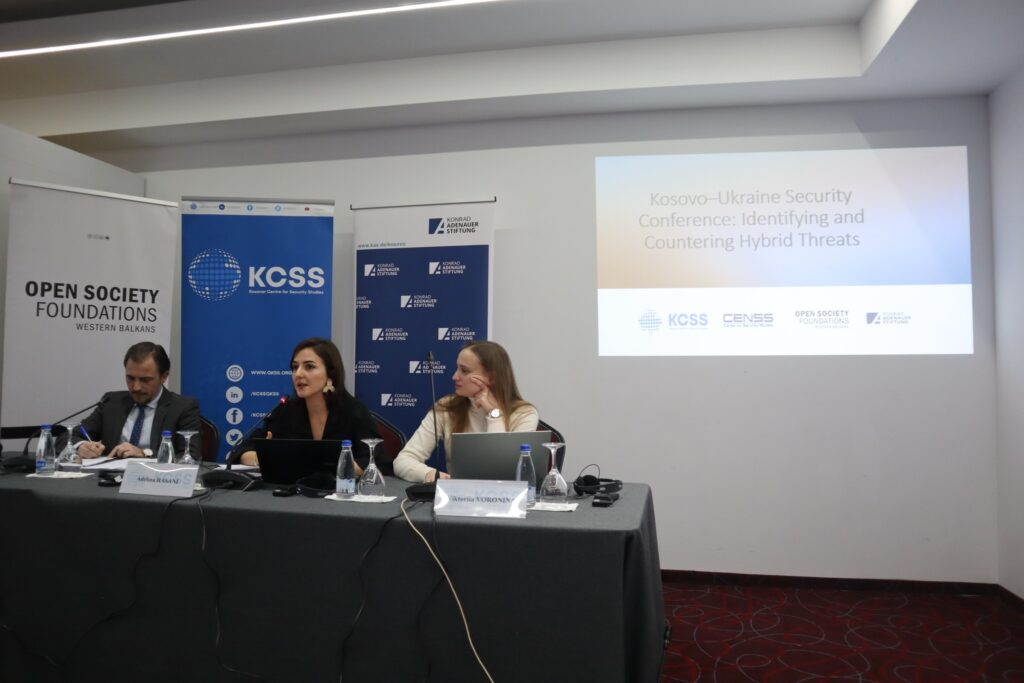
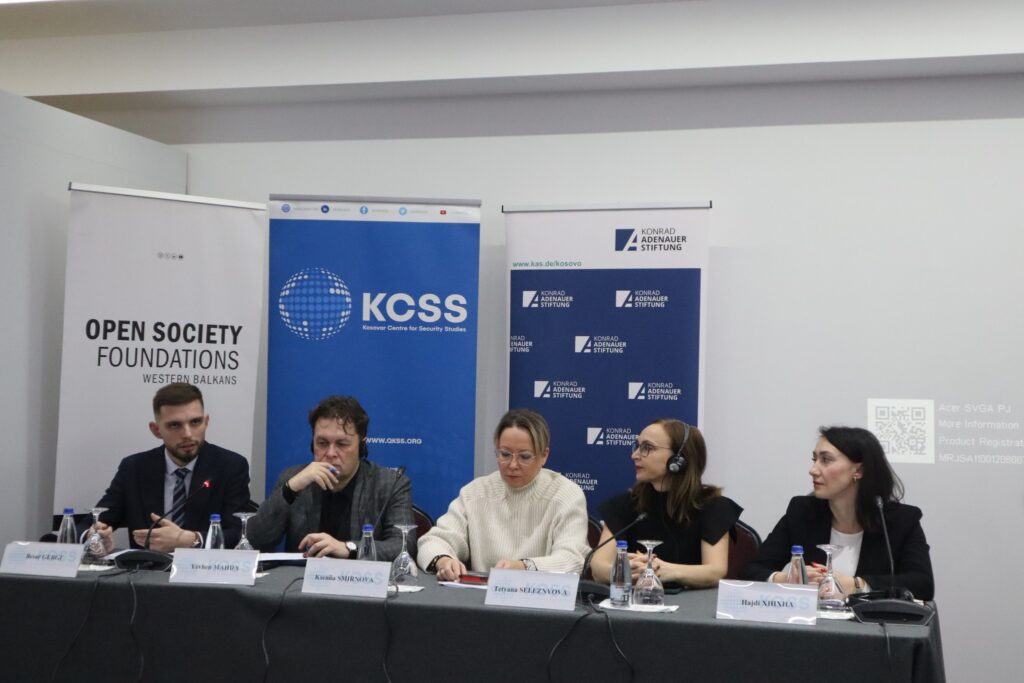
PRISHTINA, KOSOVO – the Center for Security Studies “CENSS” in partnership with the Kosovar Centre for Security Studies (KCSS), the Konrad-Adenauer-Stiftung (KAS), and Open Society Foundations Western Balkans, convened the Kosovo-Ukraine Security Conference on December 16, 2025. The event served as a critical platform for identifying and countering hybrid threats, presenting new research that reveals striking parallels between Russian tactics used in Ukraine and those currently deployed in the Western Balkans.
Identifying the Hybrid Playbook
Central to the conference was the presentation of a joint study, “Russia’s Expanding Playbook: Kosovo-Ukraine Connection,” authored by Dr. Adelina Hasani, Dr. Vadym Chernysh, and Viktoriia Voronina. The research details how Russia utilizes a “weaponization of everything” strategy—blending disinformation, religious influence, and paramilitary proxies—to destabilize target societies.
Experts highlighted the systematic use of the “failed state” narrative. By portraying both Ukraine and Kosovo as incapable of self-governance and dependent on external Western oversight, the Kremlin seeks to delegitimize their sovereignty and justify intervention.
Tools of Influence: Media, Religion, and Paramilitaries The conference explored several key dimensions of Russian hybrid warfare:
- Disinformation & Media: Russia allocates between $1 billion and $4 billion annually to information warfare. In Kosovo, platforms like Telegram and local Serbian-language tabloids are used to stoke inter-ethnic fear and depict NATO/KFOR as hostile actors.
- Cultural Diplomacy & Religion: Institutions like Rossotrudnichestvo (the “Russian House”) and the Russian Orthodox Church are used as soft-power instruments to promote the “Russian World” (Rusky Mir) ideology.
- Paramilitary Operations: The event analyzed the use of “plausible deniability” in covert operations, drawing parallels between the “little green men” in Crimea and recent security incidents in northern Kosovo, such as the Banjska attack.
Strategic Alliances and Regional Security
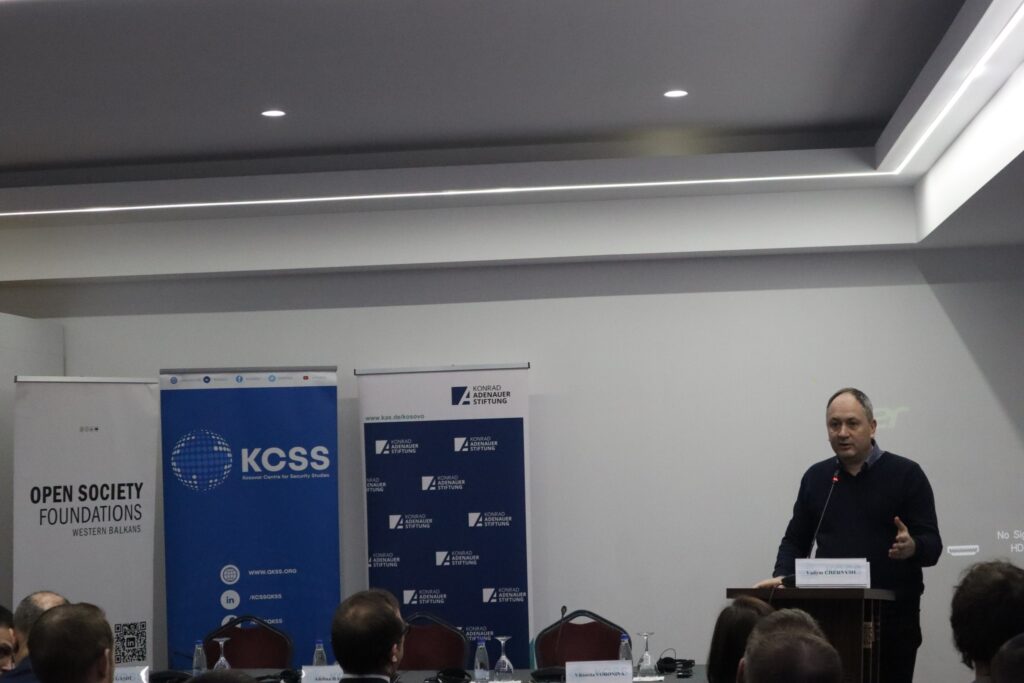
Speakers emphasized that Serbia remains Russia’s primary foothold in the Western Balkans. The conference warned that Russian intelligence agencies use the region as a hub for operations targeting neighboring countries and EU institutions. “The current global landscape is characterized by a multipolar structure where Russia seeks to project power by exploiting societal vulnerabilities,” stated Dr. Vadym Chernysh.
The full research report is available at: